Jev examples

Jev AI examples for routing and text classification

Explore 10 editable decisions for model routing, agent tools, evidence checks, support teams and text policies. Change the context or choices, then test the result in the Playground.

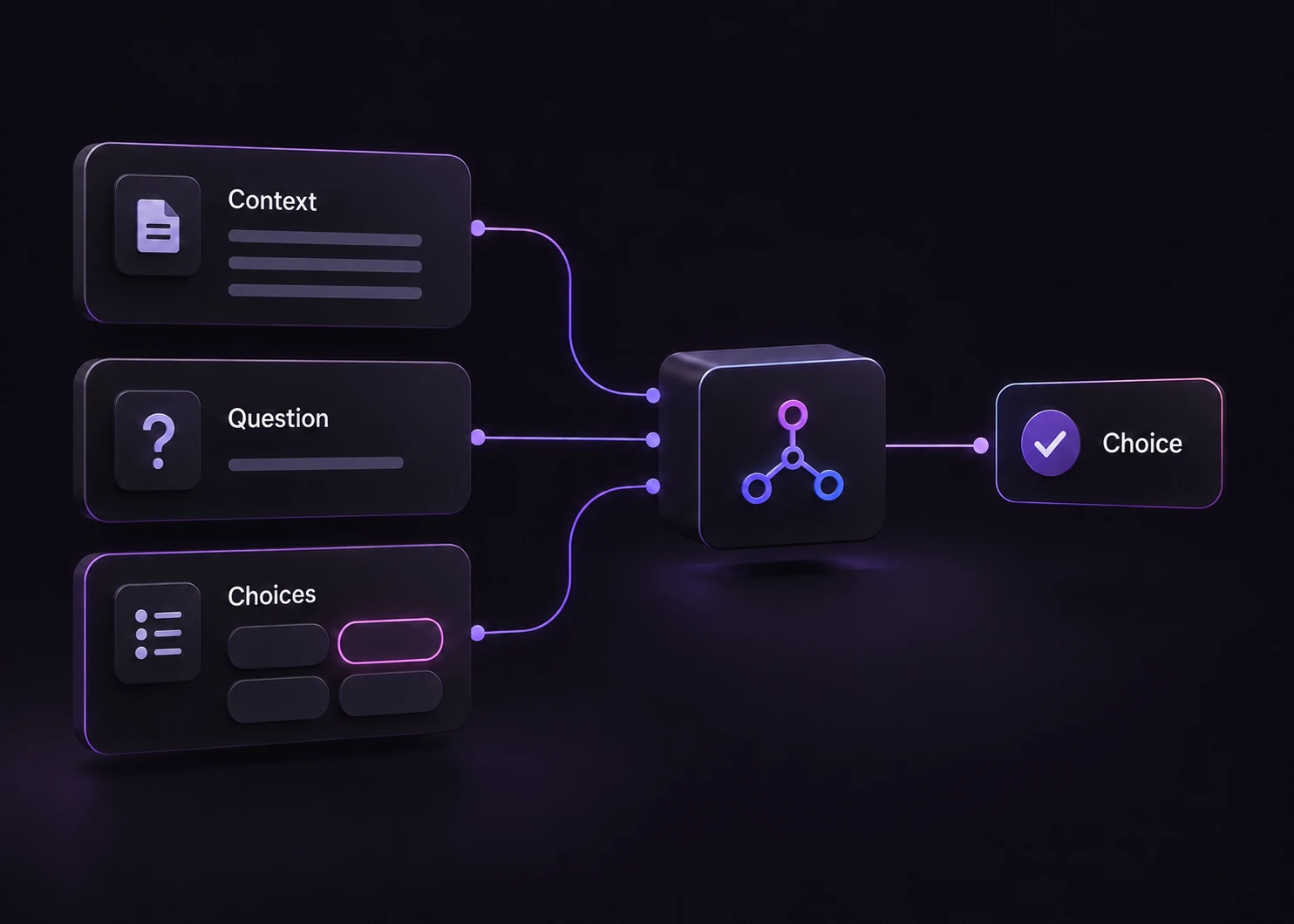
Illustration of context, one question, and a finite choice list feeding a decision model that returns a choice.
Context, a question, and finite choices. A concept illustration, not a model response.
Agent decisions

Choose what happens next.

Select from the actions, models, or skills your application already allows. The examples return a choice; they do not perform the action.

Model routing

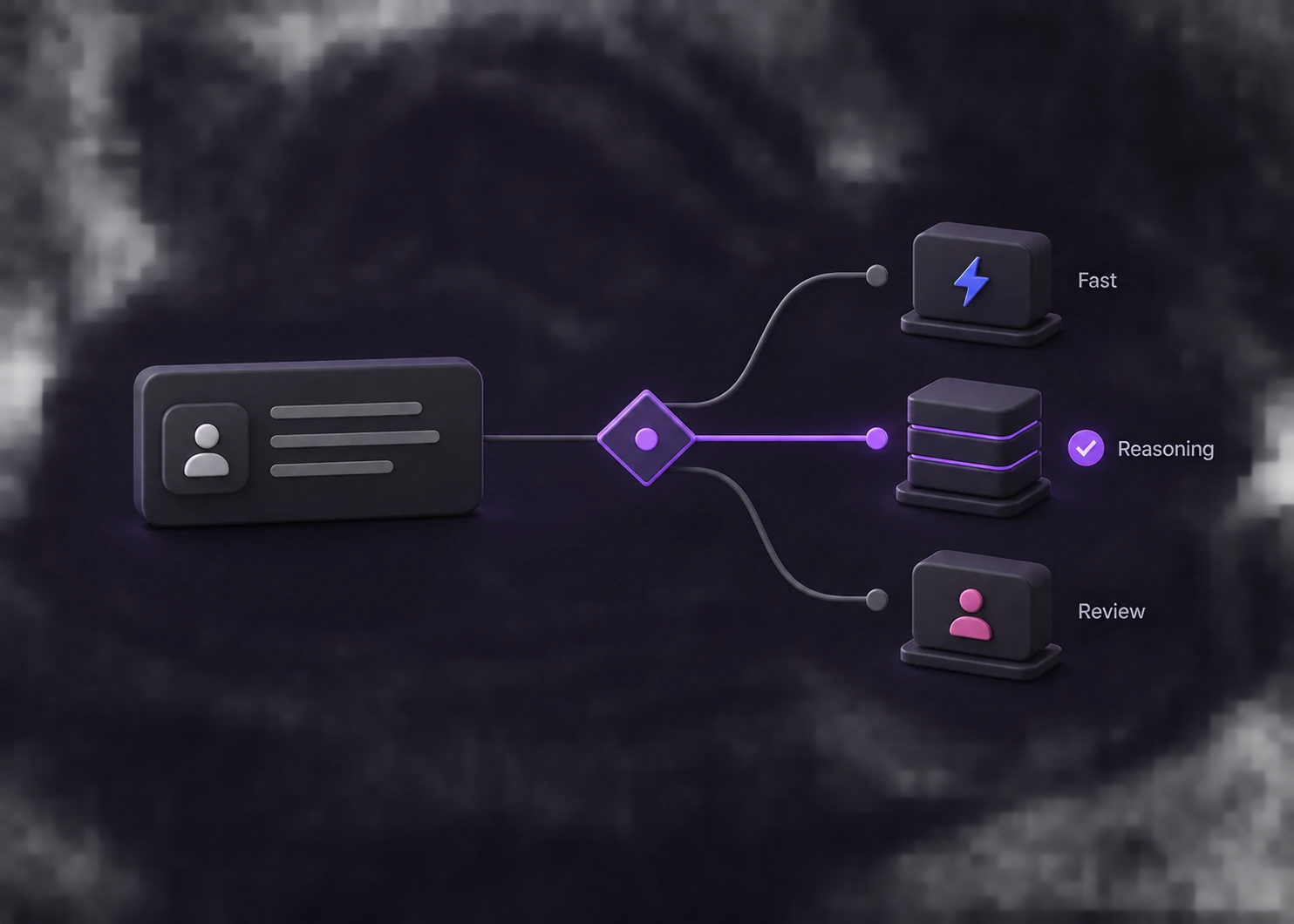
Route a concurrent-checkout debugging task using an explicit policy for fast, reasoning, or human handling. Try replacing the task with a straightforward rewrite. This selects a model tier; it does not run another model or resolve the bug. Adapted from @dani_avila7's model-router use case.

Try this example
Illustration of one request selecting the reasoning route from fast, reasoning, and review options.

Browser next step

Choose the next visible control for a receipt request from the interface descriptions. Try changing the goal to updating a saved card. The model selects a control; it does not open a browser or click anything. Inspired by @milindlabs; this text scenario is our adaptation.

Try this example

Pick an agent skill

Match a request to edit an existing investor deck against four skill descriptions. Try asking for a new deck from notes instead. Selecting a skill does not execute it. This simplified example adapts the TypeSafe skill-suggestion cookbook, rather than its complete workflow.

Try this example
Evidence checks

Keep the useful context.

Work with supplied text: retain a relevant block or check whether an excerpt supports a claim. Include an option for missing evidence.

Keep useful context

Select the useful evidence from three fictional log blocks while investigating a sign-out issue. Try changing the investigation to the CSS warnings. The model chooses an original block; application code would copy it. Inspired by @tamarajtran's tool-output filtering use case, without a measured token-saving claim.

Try this example

Check a claim

Check a claim against a fictional plan guide using Supported, Contradicted, or Not enough evidence. Try asking whether the guide includes phone support. This checks only the supplied excerpt and does not search the web. Adapted from the TypeSafe citation-checking cookbook.

Try this example
Support triage

Give each request a starting point.

These original synthetic messages let you compare similar customer intents. Treat the selected team as a suggestion and keep a human review path.

Shipping support

Classify a request about a delayed parcel that is still in transit. Try changing the request from locating the parcel to asking for a refund. This is an original synthetic customer message. The model selects a team; it does not track a real parcel or process a refund.

Try this example
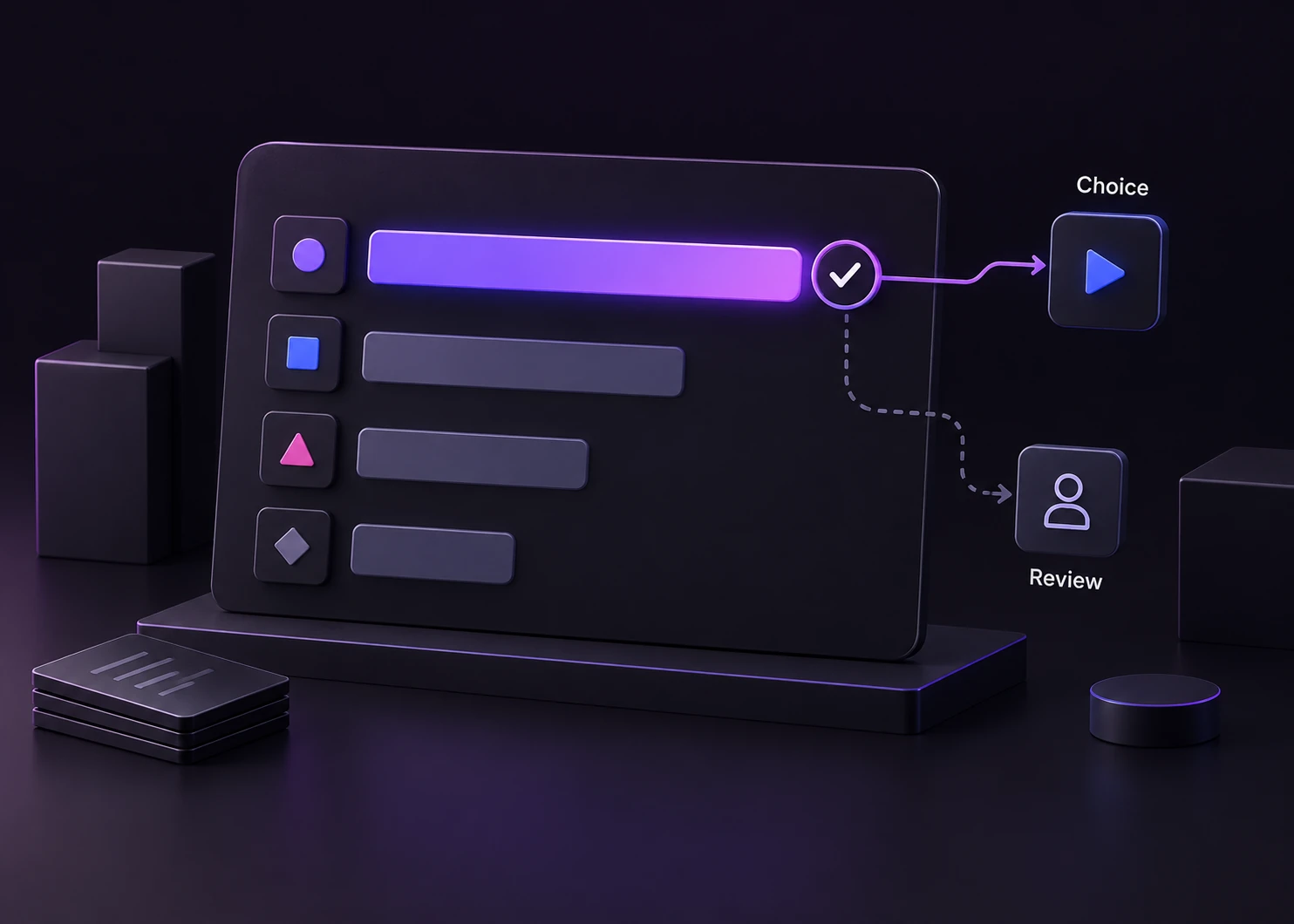
Illustration of incoming support messages classified into Billing, Shipping, and Technical teams, with a review route.

Billing question

Classify a duplicated subscription charge while the customer wants to keep the subscription. Try changing the customer's intent to cancelling the plan. This is an original synthetic message. Investigating a charge, approving a refund, and changing a subscription are separate actions.

Try this example

Technical issue

Classify a reproducible sign-in failure after an app update, using the available team choices. Try replacing the issue with a question about the invoice. This is an original synthetic message. The selected label is a routing suggestion, not a diagnosis or a completed support action.

Try this example
Text policies

Apply the rule, not just the tone.

These original forum scenarios separate conduct from relevance. They classify supplied text under a visible policy; they do not remove posts, visit links or inspect account histories.

Forum moderation

Start with a frustrated product complaint under a policy that permits specific criticism and prohibits direct personal attacks. Try replacing it with a report quoting an insult. Allowed, Policy violation, and Needs review are editable choices. This is an original policy example, not a recorded moderation result or an enforcement action.

Try forum moderation

Spam triage

Compare an unrelated luxury-watch advertisement with a desktop photo-editing question or a related link with an explanation. Use Needs review when relevance cannot be established from the text. This original example does not scan URLs, discover repeated posts or act on an account. It returns a policy label after you submit.

Try spam triage
Make it your own

Change a condition. Keep the task clear.

The input fields remain editable in Playground. Change one detail first, then compare the returned choice with your own expectation.

  • Relevant context
  • One question
  • Distinct choices
  • A review option

Too open-ended

Read this customer message, solve the problem, and write a reply.

A finite decision

Provide the message and the routing policy. Ask which team should review it. List the allowed teams and a Human review option for unclear requests.

Work with a table

One file. Decisions you can review.

Try ten original synthetic feedback messages, then replace them with your own non-sensitive sample data.

The built-in batch classifies each of ten messages by Topic, Sentiment, and Urgency. Enable only the dimensions you need and edit the instruction before running. The model returns labels for each row; application code calculates the category totals.

Bring your own text

Paste text or select a CSV, TSV, or TXT file up to 128 KB. Files are parsed in your browser; choose the text column and inspect the rows before sending them. A batch accepts at most 20 non-empty rows, 1,000 characters per row, 12,000 text characters in total, and 3 enabled dimensions. Export Excel workbooks to CSV first.

Know what is being sent

Running the batch sends the selected text and classification questions through this site to the TypeSafe API after security verification. It is not a local-only model. Do not include secrets or personal data. Review row-level results and any failures, then download CSV or JSON. The summary is a count of returned labels, not a generated report.

The workflow is inspired by @ayami_marketing’s spreadsheet review-analysis example. The ten messages are our original synthetic samples, not data copied from the post. We do not reproduce the author’s interface or claim its performance.

Open batch Playground or start with the support-routing recipe for a server-side integration.
Take the next step.

Understand the model contract, build a routing flow, or start from a complete code example.

Before you run an example.

Are the answers fixed in these examples?

No. The presets contain context, a question, and choices. Running an example requests a fresh result through the TypeSafe API after verification. Repeating an unchanged, clear input may return the same choice. These examples are not an accuracy benchmark.

Can I change the inputs or use my own text?

Yes. Edit the context, question, and choices in Playground before running. The original source attribution is cleared when you change a preset so that your input is not attributed to its inspiration. Avoid submitting secrets or personal data.

Where do the example scenarios come from?

Three agent scenarios are inspired by attributed X posts; two evidence or skill scenarios adapt TypeSafe cookbooks. The three support messages, two text-policy scenarios and ten synthetic batch messages are original samples written for this Playground. Official Choice and confidence documentation explain the request and response concepts, not validation of these sample outcomes.

Does Jev click controls, remove posts, or send replies here?

No. These ten examples select from the choices you provide. Your application would validate the result and decide what action is permitted. This site does not execute the selected tool, remove forum posts, ban accounts, scan URLs or send a support reply.

Which files can I use for a batch?

Use CSV, TSV, or TXT up to 128 KB, with at most 20 text rows and 3 enabled dimensions. The built-in sample contains 10 original feedback messages. XLSX, large asynchronous jobs, and open-ended summary writing are not supported in this Playground.

What do the response time and cost tell me?

Response time measures the request through its completed response after verification; it includes the network and service work. The API cost is an estimate based on reported token usage and known pricing, with unavailable or partial usage identified. A single run does not establish a speed, accuracy, or cost advantage over another model.

Start with one clear decision.

Choose an example, edit the inputs, and review a real response. Keep an explicit fallback for cases your choices cannot resolve.