Jev post hook classification

Classify the opening hook of a social post

Paste a post to classify its first sentence as a question, how-to, story, numerical finding or contrarian opening. Later sentences do not determine the opening hook's label.

Classify the opening of a supplied postLive API
Try an example

Original synthetic post; no account data or engagement measurement.

Source: Workflow inspiration on X

Source and example scope

This bounded example does not reproduce the source archive, cost, timing or growth findings.

Classify the first sentence only, ignoring later sentences.

Decision rules and labels
QuestionHow-toStoryData-ledContrarianOther/unclear
A real response from the Jev API

Edit any input to explore a different decision. No request is sent until you run it.

Your next decision

Not run yet

Choose an example or write your own input, then run it to see the ranked choices.

Results are not stored by this site. Your submitted text is processed by the API provider.

The decision

What does Jev post hook classification label?

Jev chooses an opening type from the labels you provide. This example considers only the first sentence, so a question in the second sentence does not turn a generic announcement into a question-led opening. A promise to teach a task counts as How-to even when it mentions three steps; that number is not a reported finding.

The rubric is ours, not a universal taxonomy. Question, How-to, Story, Data-led and Contrarian identify different features of an opening. Other/unclear keeps incomplete or unmatched text from being forced into one of those labels. Define category boundaries before interpreting results from an archive.

TypeSafe Choice returns a selected label and probabilities for supplied options. LinkedIn guidance discusses hooks as part of framing a contribution. Research on microblogging questions distinguishes question purposes, which is a reminder that punctuation alone does not explain an entire post. None of these sources validates this particular rubric or predicts how the examples will perform.

The source X post describes analyzing an archive for topic, hook and tone. We built a smaller, independent demonstration with six synthetic posts. Its author-reported reach, costs, timing and engagement comparisons are not measurements of this page. Edit the text in the hero, then inspect the exact recorded examples below.
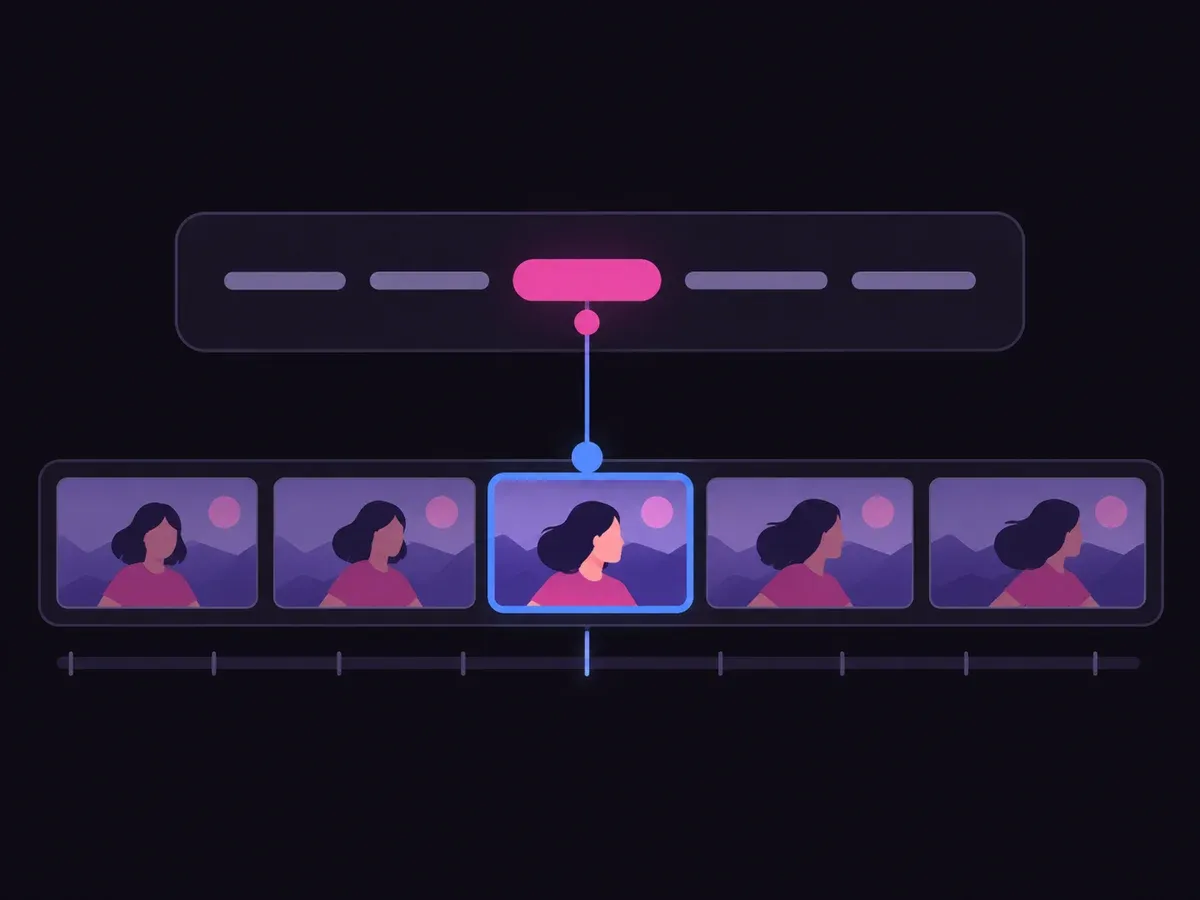

Illustration of selecting a caption token for emphasis in an edit timeline
Illustration of the decision flow.
How it works

Audit an opening in four steps.

Use a stable rubric before comparing labels across posts.

  1. Illustration of adding the text or evidence for a decision

    Choose the unit of text

    This example evaluates the first sentence. Keep that scope fixed instead of mixing whole-post tone with opening type.

  2. Illustration of defining a question and its allowed choices

    Write label boundaries

    Define instructions, questions, personal events, numerical findings and challenges. Include Other/unclear.

  3. Illustration of sending one input and comparing the returned choices

    Inspect the live result

    Compare the selected label and alternatives. Try moving a question from the opening into a later sentence.

  4. Illustration of reviewing a result and an uncertain item before using it

    Keep outcomes separate

    Store labels with the original post ID and rubric version. Engagement analysis requires separate measured data and review.

Our API test

Six recorded opening labels, including a split decision.

Six recorded opening labels, including a split decision.
Synthetic openingObserved labelLeading probability
Question openingQuestion91%
Step count is not a findingHow-to95%
Personal eventStory100%
Synthetic numerical findingData-led97%
Challenging a beliefContrarian100%
Generic announcementOther/unclear61%

Live requests on September 28, 2026; one timeout followed by a selective manual resumption. Functional examples, not an accuracy or engagement benchmark. Other/unclear led at 61%, with Question at 38%, for the generic opening.Verified

Understand the results

An opening label can help organize a content archive for review

An opening label can help organize a content archive for review.

Read the example notes

Store the post ID, original text, rubric version, chosen label and full distribution together. Keep the original input when you disagree with a result. Changing a definition changes the task, so do not silently combine outputs from different rubric versions.

Step count is not a finding

The Generic announcement example starts with Quick update.

Read the example notes

Its second sentence contains a question and a how-to phrase, but the declared scope excludes it. The Step count example is instructional rather than a numerical finding. These boundaries expose what the classifier was asked to consider.

A label does not establish that one type causes more views, clicks or replies

A label does not establish that one type causes more views, clicks or replies.

Read the example notes

This page has no engagement dataset and calculates no such association. Any later comparison needs measured outcomes, a stated sample and a measurement window. Differences between posts can have explanations outside their opening label. This demo produces no ranking of effective hooks.

Using the result in your application

Download observed-hooks.json and run-choice-sample.mjs into a private Node.js project.

Read the example notes

The examples use Node.js 24.18.0 and @typesafe-ai/sdk 0.6.0. Run npm init -y and npm install @typesafe-ai/sdk@0.6.0, set TYPESAFE_API_KEY privately, then run node run-choice-sample.mjs observed-hooks.json other. The runner submits one selected example without retries.

The fixture preserves every input, exact rubric, all labels and recorded API distributions

The fixture preserves every input, exact rubric, all labels and recorded API distributions.

Read the example notes

Fresh requests may return different probabilities. Six synthetic checks do not estimate accuracy on an account archive. Build a reviewed sample from your permitted data before using labels in a larger analysis.

One live request

Replay one opening classification from Node.js.

View the code example
run-choice-sample.mjs
import { readFile } from 'node:fs/promises';
import { choice, TypeSafeClient } from '@typesafe-ai/sdk';

// Run one selected sample. There are no retries or automatic batch requests.
const [file, sampleId] = process.argv.slice(2);
if (!file || !sampleId || !process.env.TYPESAFE_API_KEY) {
  throw new Error('Set TYPESAFE_API_KEY, then run: node run-choice-sample.mjs FIXTURE.json SAMPLE_ID');
}
const raw = await readFile(file, 'utf8');
if (Buffer.byteLength(raw) > 1_000_000) throw new Error('Fixture is too large');
/** @type {{samples: Array<{id: string, request: {context: string, question: string, choices: string[]}}>}} */
const fixture = JSON.parse(raw);
const matches = fixture.samples.filter(sample => sample.id === sampleId);
if (matches.length !== 1) throw new Error('Select exactly one existing sample ID');
const { context, question, choices } = matches[0].request;
if (typeof context !== 'string' || typeof question !== 'string' || context.length > 12000
  || question.length > 500 || !Array.isArray(choices) || choices.length < 2 || choices.length > 12
  || choices.some(label => typeof label !== 'string' || !label || label.length > 120)
  || new Set(choices).size !== choices.length) throw new Error('Invalid sample request');
const client = new TypeSafeClient({ logLevel: 'off' });
const start = performance.now();
try {
  const result = await client.systemOne({ model: 'jev-latest', state: { context, question, choices },
    questions: { decision: choice(question, Object.fromEntries(choices.map(label => [label, null]))) } },
    { timeout: 10000, retry: { maxRetries: 0 } });
  console.log(JSON.stringify({ sampleId, elapsedMs: Math.round(performance.now() - start), result }, null, 2));
} catch {
  console.error('The API request failed. No retry was sent; check your account and network privately.');
  process.exitCode = 1;
}
Scope of this demo

What this example helps you test.

Supplied choices

What you can test

  • Testing a declared opening-type rubric
  • Keeping first-sentence scope consistent
  • Preparing annotations for a separate content audit
Application responsibilities

What this demo does not do

  • Predicting views, likes or account growth
  • Proving a hook type causes better engagement
  • Writing posts or collecting an account archive
Example FAQ

Questions before you use the result.

Understand the choices, the source and what a live result means.

Does Data-led mean the number is true?

No. It describes the wording of an opening. The numeric example is explicitly synthetic; this classifier does not verify its claim.

Why is a step count classified as How-to?

The rubric treats an explicit teaching promise as How-to. A count of steps differs from a reported numerical finding.

Why ignore a question in the second sentence?

This example classifies the first sentence only. Whole-post purpose is a different task and needs a different question.

Which label gets the most engagement?

This demo cannot answer that. It contains synthetic text and classification results, without measured views, likes or clicks.

Can I change the taxonomy?

Yes. Edit the labels and definitions together. Preserve the version used so different policies are not silently treated as equivalent.

Move a sentence and test the boundary.

Change the opening or rubric in the live window. Compare responses before applying labels to a larger archive.


