Jev integration owner check

Check who accepted responsibility for final integration

Supply the current assignments and acceptance evidence. Distinguish one confirmed integration owner from unaccepted proposals, module authorship and conflicting final-handoff records.

Check who accepted the final handoff.Live API
Try an example

Original synthetic input. Edit the task or evidence to make a new API request.

Source: Workflow inspiration on X

Source and example scope

The inputs, rubric and preview are original. This window demonstrates the stated decision only; it does not reproduce the source application or its measurements.

Check current integration and final-handoff ownership.

Decision rules and labels
Owner confirmedOwner unconfirmedConflicting assignmentsNeed more evidence
A real response from the Jev API

Edit any input to explore a different decision. No request is sent until you run it.

Your next decision

Not run yet

Choose an example or write your own input, then run it to see the ranked choices.

Results are not stored by this site. Your submitted text is processed by the API provider.

What the example checks

Six cases of accepted or missing ownership

A Jev integration owner check inspects six assignment situations: explicit acceptance, module owners without a handoff owner, an unaccepted proposal, conflicting sole owners, a missing roster and a file review without integration responsibility.

Using the result in your application

Several agents can complete their assigned changes while nobody has accepted responsibility for combining and handing off the result.

Read the example notes

This original demo inspects supplied assignment and acceptance records for that specific responsibility. Jev returns a confirmed, unconfirmed, conflicting or missing-evidence label. The output stays pending and retains the release and roster IDs. It does not appoint an owner, merge changes or judge whether the release is ready.

Source and example scope

The source post on X calls for an integration owner alongside implementation roles and independent review in an agentic development workflow.

Read the example notes

Our six synthetic inputs turn that responsibility question into a small, reproducible check. The source is commentary rather than evidence of a deployed ownership system. We did not inspect its shortened link or adopt a performance claim. The model evaluates the records supplied in each request, not a live team's activity.

GitHub documents CODEOWNERS for responsibility over repository code and review requests

GitHub documents CODEOWNERS for responsibility over repository code and review requests.

Read the example notes

Protected-branch settings can require reviews and status checks. Those mechanisms have their own enforcement rules; this window does not parse a CODEOWNERS file or inspect branch settings. Its narrower question is whether the supplied workflow records identify someone who accepted integration and final handoff. A review or a file-level assignment can be present while that workflow responsibility remains unassigned.

How it works

Try the example in four steps

Use the sample to understand the rule, then test your own input for integration ownership.

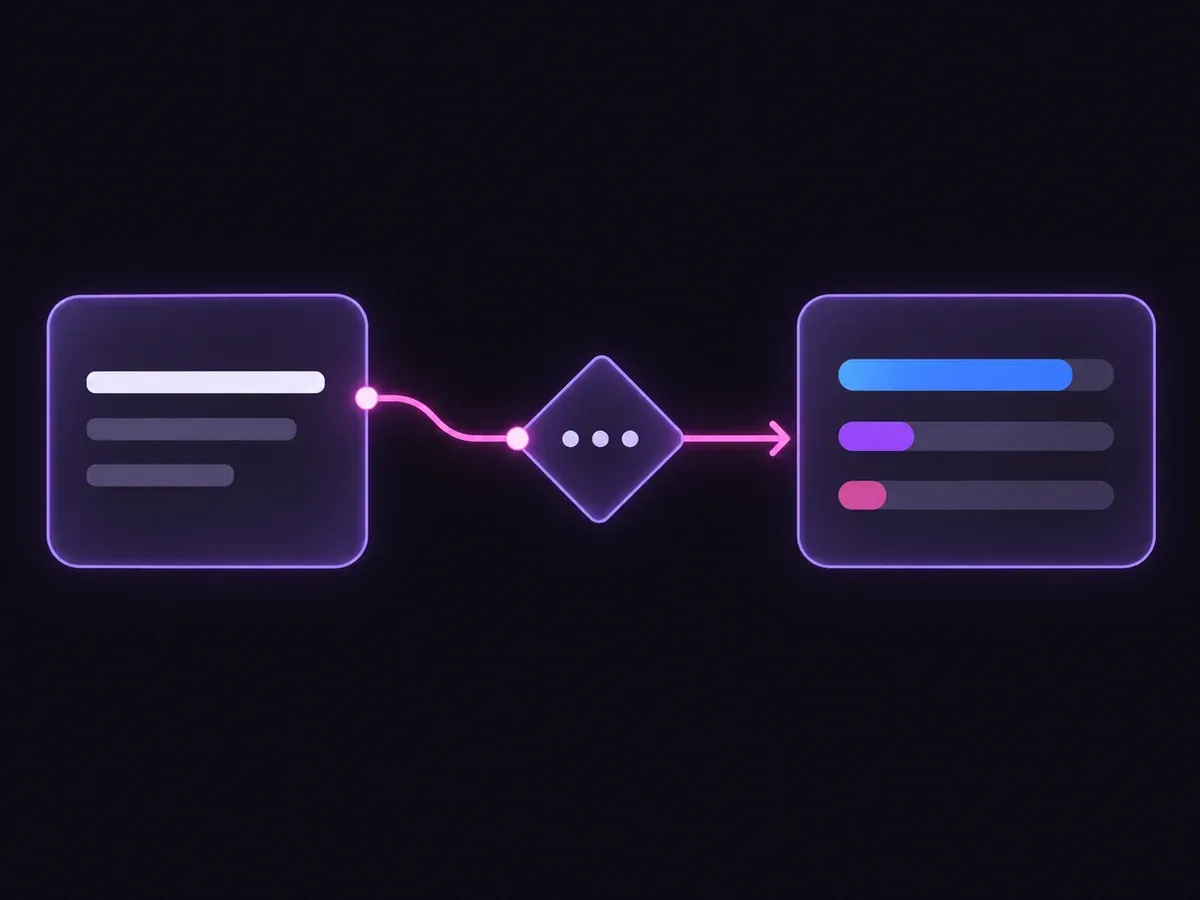
  1. Illustration of adding the text or evidence for a decision

    Add the information to check

    Supply the current assignments and acceptance evidence.

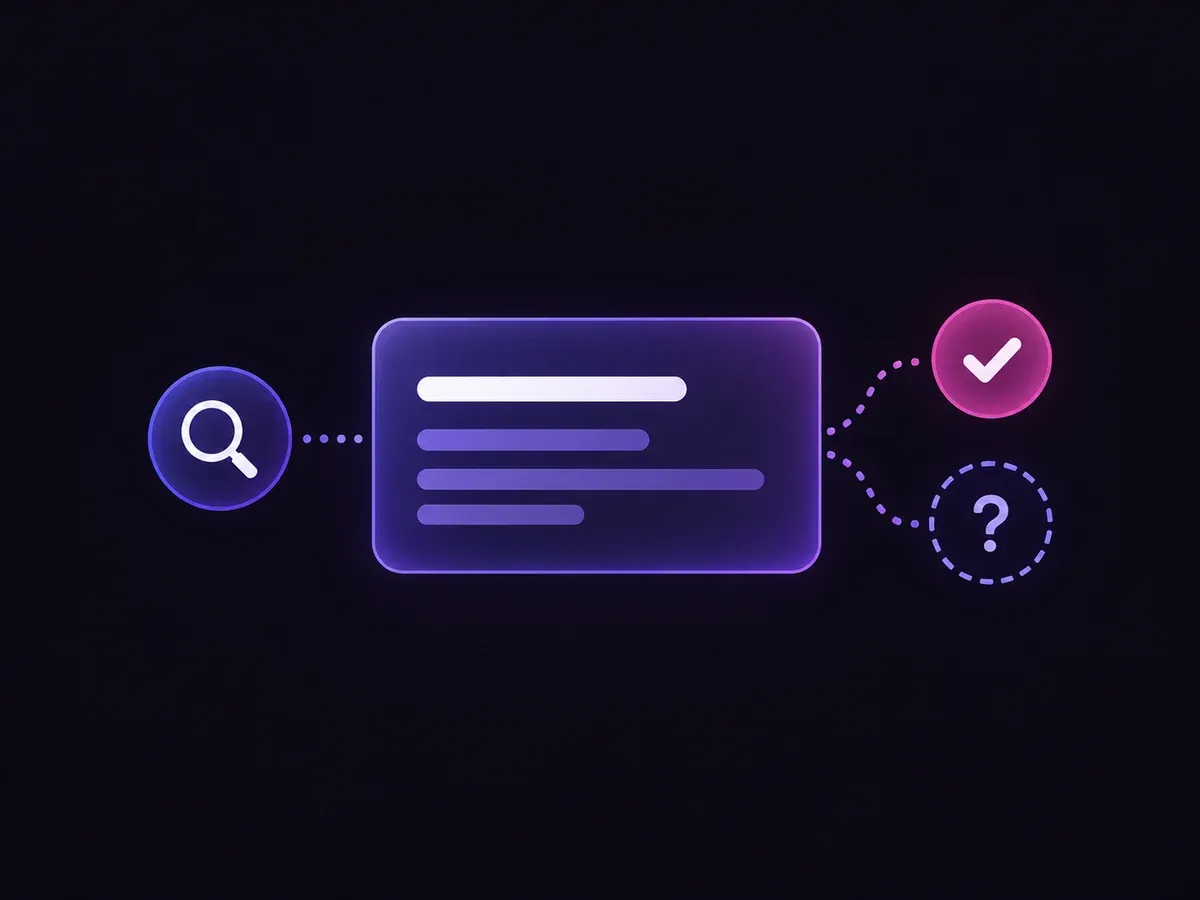
  2. Illustration of defining a question and its allowed choices

    Confirm the question and labels

    Open the decision rules and keep the intended distinction between Owner confirmed, Owner unconfirmed, Conflicting assignments, Need more evidence. Edit the choices only when testing your own rule.

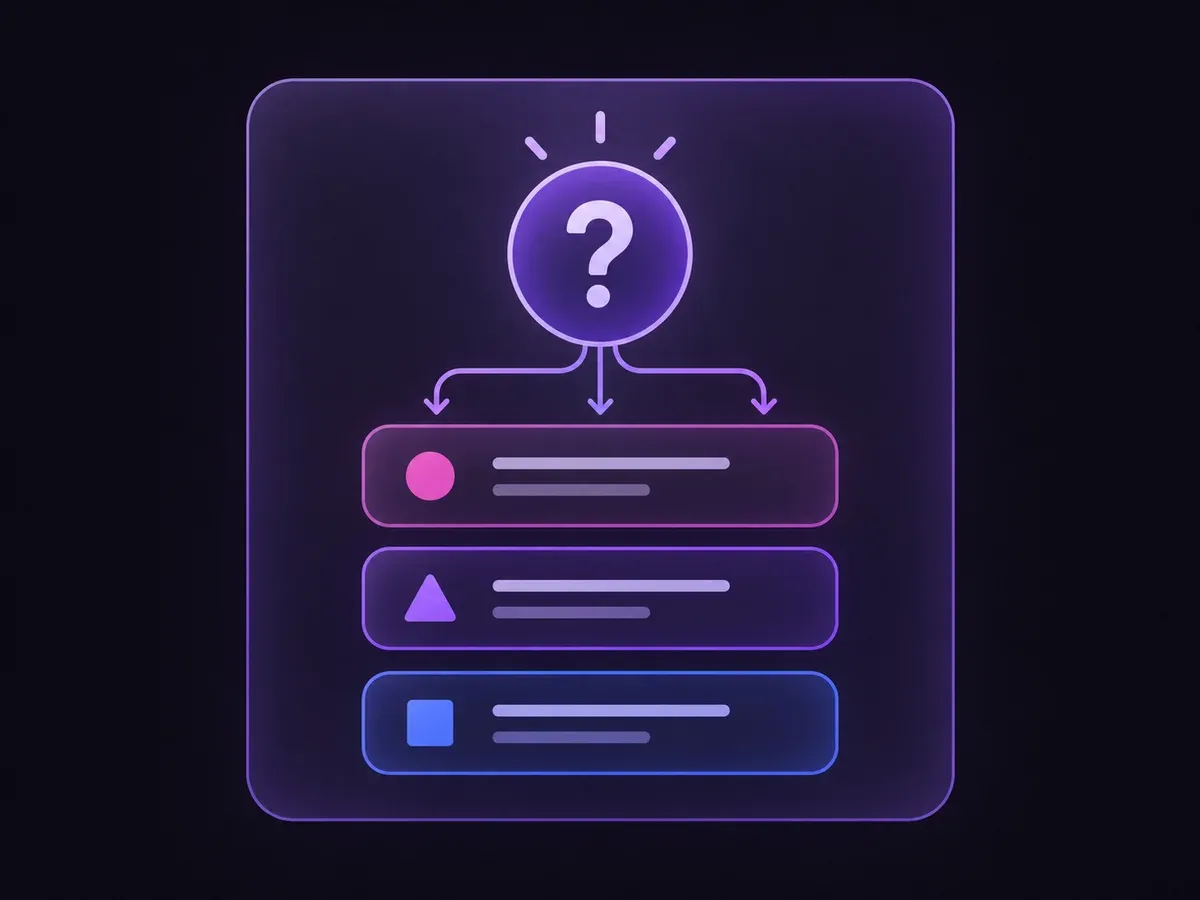
  3. Illustration of sending one input and comparing the returned choices

    Run the decision

    Use a sample first, then try your own input. Compare the selected label with the other returned probabilities.

  4. Illustration of reviewing a result and an uncertain item before using it

    Review the next step

    Review Need more evidence before using a result. The label is a decision about the supplied information, not an executed action.

Our API test

What the six original inputs returned.

What the six original inputs returned.
Original test inputFixture expectationObserved labelLeading probability
Inspect an accepted integration roleOwner confirmedOwner confirmed100%
Separate module and integration ownershipOwner unconfirmedOwner unconfirmed100%
Keep an unaccepted proposal visibleOwner unconfirmedOwner unconfirmed100%
Preserve conflicting current recordsConflicting assignmentsConflicting assignments100%
Keep the current roster missingNeed more evidenceNeed more evidence100%
Separate a review role from final handoffOwner unconfirmedOwner unconfirmed99%
  • 6 of 6 original fixture expectations matched. Contrary outputs are preserved in the table and downloads; these checks are not held-out accuracy or production suitability.
  • Measured adapter round trips: 468-1288 ms. Estimated input cost: $0.00002625-$0.00002722 per request. These observations are not a latency guarantee or invoice.

6 actual Jev API calls on October 3, 2026. Original synthetic inputs check this rubric and handoff; they do not establish held-out accuracy. Probabilities are model outputs.Verified

Understand the results

Inspect an accepted integration role

The first record names Alice as integration owner and includes explicit acceptance for the current release.

Read the example notes

Bob's review role does not conflict with that assignment. Jev selected Owner confirmed with probability 1.00, matching the expectation recorded before the request. The pending packet keeps the release and roster revision supplied to Jev so a controller can inspect which assignment was evaluated. A semantic confirmation does not grant Alice repository permissions or prove that she has performed the integration work.

Separate module and integration ownership

The second roster is complete and assigns two implementation modules without an integration owner.

Read the example notes

Owner unconfirmed is expected because the missing responsibility is explicitly documented. Completing the frontend and API work does not itself establish who combines the changes. This case concerns accountability, not whether either module is correct. A controller can show the gap to a coordinator; the demo does not select one of the workers as an automatic substitute.

Using the result in your application

The proposal fixture names a possible owner but says acceptance is pending.

Read the example notes

Owner unconfirmed is expected under the declared rule. This distinction matters when a task is offered to an unavailable worker or appears in a planning note before assignment. The example does not contact Alice or infer acceptance from silence. A later recorded acceptance would change the supplied evidence and require a fresh request rather than reuse of this observation.

Preserve conflicting current records

The conflicting fixture provides two equally current records, each naming a different sole owner and including acceptance.

Read the example notes

Conflicting assignments is expected because no precedence rule resolves them. This is different from a roster that intentionally shares responsibility: the supplied records both claim exclusivity. The model must not silently choose the first or last record as authoritative. A coordinator needs to resolve the actual assignment and retain the previous conflicting evidence.

Keep the current roster missing

The fifth input supplies a compilation status without a current roster.

Read the example notes

Need more evidence is expected. Unlike the complete roster that explicitly lacks an owner, this request does not establish whether a valid assignment exists elsewhere. A successful build also answers a different question from responsibility for handoff. The window makes no repository call to fill that gap; developers can add the relevant current assignment and make a new request.

Missing integration owner despite a file-review role

The last fixture includes a file-review role and a command-looking comment, while the complete workflow roster explicitly lacks an integration owner.

Read the example notes

Jev selected Owner unconfirmed with probability 0.99, matching the original expectation; Need more evidence retained 0.01. GitHub's code-review mechanism is real, but the supplied review record and people here are fictional. This checks one boundary between review and integration responsibility. It neither certifies GitHub configuration nor establishes general resistance to instructions embedded in workflow notes.

Source and example scope

Fixture expectations are authored before the calls. Any contrary model choice remains visible beside its expectation and complete distribution; no repeated judgment is used to obtain a preferred label.

Using the result in your application

Download the exact sample requests and saved observations below.

Read the example notes

Expected labels are original fixture checks and stay outside the request sent to Jev. The observation file preserves the complete probabilities and the hash of each exact request. Editing a task, rubric or candidate requires a fresh response; a matching sample name does not make an older answer current.

Using the result in your application

The JavaScript runner makes one independent SDK request for a chosen sample ID.

Read the example notes

It reads TYPESAFE_API_KEY privately from the environment and has no automatic retry. The Python consumer operates offline: it checks the rubric, labels, unique sample identities, request hashes and valid probability distributions before selecting a fixed local preview. A tied leading result remains pending for review.

Source and example scope

The page reports measured adapter round trips and estimated input cost for the recorded calls.

Read the example notes

Those values describe these requests, not a provider latency guarantee or a billing statement. Six deliberately authored fixtures can check the stated behavior, but they do not establish accuracy on an unseen dataset. Keep disagreements and missing-input examples when testing an integration.

Runnable offline example

Replay one request and inspect the saved preview.

View the code example
Replay commands
npm install @typesafe-ai/sdk@0.6.0
# Set TYPESAFE_API_KEY privately in your shell.
node run-choice-sample.mjs samples.json accepted-owner
python preview_choice_workflow_v4.py samples.json saved-api-results.json
Scope of this demo

Where does this decision fit?

Useful when a release combines work from several agents

  • Checking explicit acceptance of integration and final-handoff responsibility.
  • Keeping unresolved exclusive assignments visible to a coordinator.
  • Distinguishing a complete unassigned roster from absent current evidence.

Needs an actual assignment and repository policy

  • Appointing an owner or inferring acceptance from silence.
  • Reading unsupplied team activity, repository permissions or branch settings.
  • Treating a confirmed responsibility as permission to merge or deploy.
Example FAQ

Questions about this original decision workflow.

This check describes responsibility in supplied records. It does not grant execution authority.

Does the demo assign an integration owner?

No. It classifies supplied evidence and prints a pending local packet. A coordinator must make the assignment through the actual workflow and record acceptance.

Is a CODEOWNERS approval enough for this check?

The demo asks about integration and final-handoff responsibility, which the supplied workflow must explicitly establish. It does not interpret a file review as acceptance of a different role.

Why separate an absent owner from missing evidence?

A complete roster can explicitly show that nobody owns integration. An omitted roster leaves that fact unknown. The two inputs need different labels so the controller knows which information is missing.

Does Owner confirmed mean the release can ship?

No. Ownership is one workflow fact. Review results, build status, repository policy and deployment authorization remain separate checks; this page performs no merge or deployment.

Try a task from your own workflow

Change the supplied task or evidence here, then inspect the live response. Playground supports another explicit decision.