Jev clip payoff completion

Check whether a clip delivers its promised answer

Give the clip's setup and ending. Check whether its explicit questions and promises are resolved inside the supplied text, keeping an absent ending unresolved.

Does the answer land before the clip ends?Live API
Try an example

The clip supplies the stated cause and outcome.

Source: API-collected workflow inspiration; original demonstration below

Source and example scope

The studio roundup links jevcut. Its pinned README describes the opening-context and payoff checks adapted here. The six inputs, choice labels, missing-input handling and priorities are original synthetic adaptations. This text-only window does not run jevcut, cut media or reproduce the source’s performance and cost claims.

Compare the supplied clip setup and ending.

Decision rules and labels
Payoff includedPayoff missingNo promised payoffNeed clip
A real response from the Jev API

Edit any input to explore a different decision. No request is sent until you run it.

Your next decision

Not run yet

Choose an example or write your own input, then run it to see the ranked choices.

Results are not stored by this site. Your submitted text is processed by the API provider.

The decision

An interesting setup is not a completed payoff.

“There was one reason” creates a specific expectation. If the supplied cut ends before naming that reason, its payoff is missing even if the opening works well on its own.

The three-causes preset supplies only one cause. The rule checks all explicit promises; it does not approve the clip because one useful fact appears. A plain description with no promise gets a separate outcome.

Distinguish a known ending from an omitted field. A clip that visibly cuts off can be judged as missing its payoff. When the ending was never supplied, this demonstration cannot tell where the editor stopped. It returns a label without trimming media or predicting performance.

The studio roundup links jevcut. Its pinned README describes the opening-context and payoff checks adapted here. The six inputs, choice labels, missing-input handling and priorities are original synthetic adaptations. This text-only window does not run jevcut, cut media or reproduce the source’s performance and cost claims.

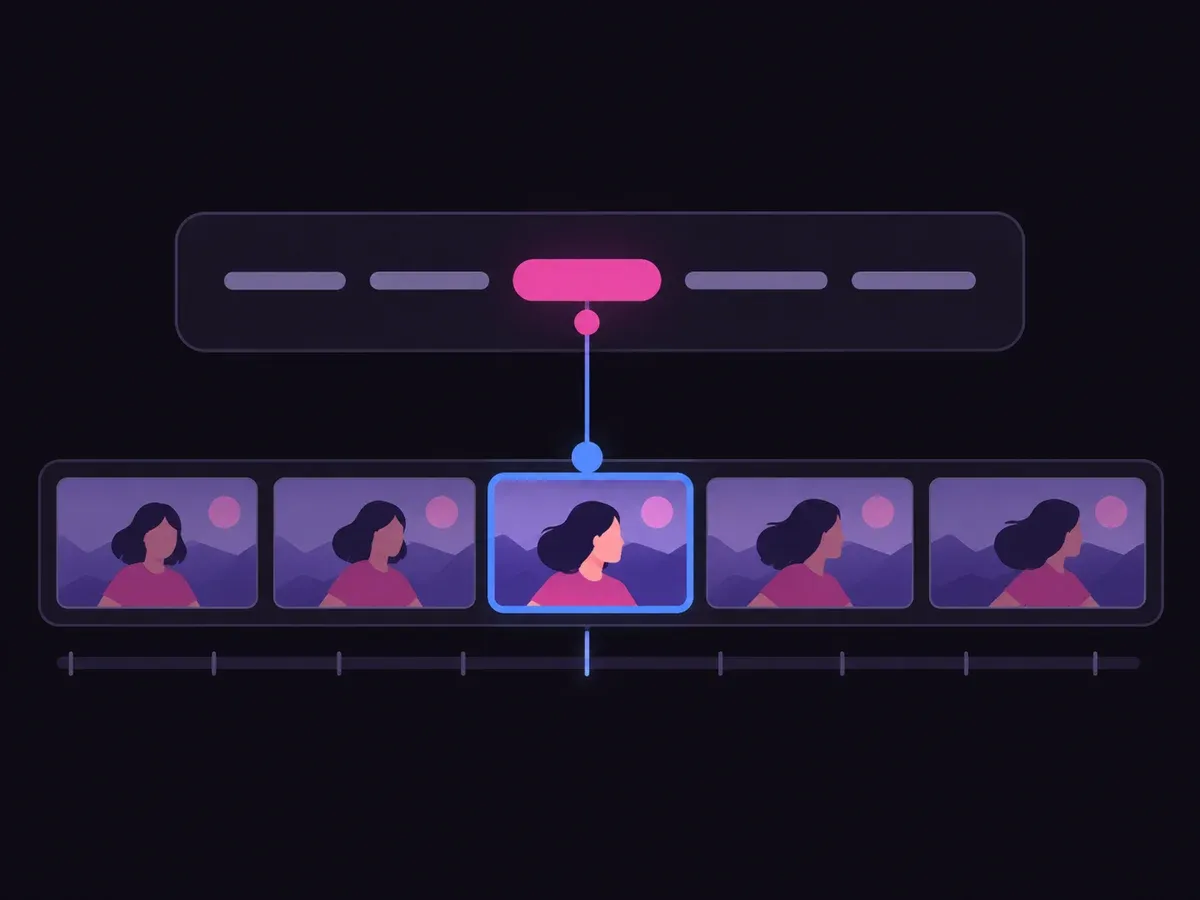
Illustration of selecting a caption token for emphasis in an edit timeline
Illustration of the decision flow.
How it works

Try the example in four steps

Use the sample to understand the rule, then test your own input for clip payoff review.

  1. Illustration of adding the text or evidence for a decision

    Add the information to check

    Give the clip's setup and ending.

  2. Illustration of defining a question and its allowed choices

    Confirm the question and labels

    Open the decision rules and keep the intended distinction between Payoff included, Payoff missing, No promised payoff, Need clip. Edit the choices only when testing your own rule.

  3. Illustration of sending one input and comparing the returned choices

    Run the decision

    Use a sample first, then try your own input. Compare the selected label with the other returned probabilities.

  4. Illustration of reviewing a result and an uncertain item before using it

    Review the next step

    Review Payoff missing, Need clip before using a result. The label is a decision about the supplied information, not an executed action.

Our API test

Recorded API observations

Recorded API observations
Original inputObserved labelLeading probability
Question answeredPayoff included99.0%
Answer cut offPayoff missing99.0%
Problem resolvedPayoff included100%
Plain descriptionNo promised payoff87.0%
Only one of threePayoff missing98.0%
Ending not suppliedNeed clip73.0%

These are six original synthetic inputs, tested once per request revision. The percentage is the leading option probability, not measured accuracy. Authored expectations and any disagreements remain in the downloadable evidence. 6 of 6 results matched the authored fixture expectations.Verified

Understand the results

Replay the saved synthetic requests to inspect each recorded decision

Replay the saved synthetic requests to inspect each recorded decision. Authored expectations and model disagreements remain available; these examples are not a production accuracy benchmark.

Using the result in your application

The single-request SDK runner uses your private TYPESAFE_API_KEY. The offline consumer reads saved observations, checks request hashes and prints a pending output. It does not call the model or change any external system.

Runnable offline example

Run one sample, then inspect the local packet

View the code example
Single-request replay
npm install @typesafe-ai/sdk@0.6.0
# Set TYPESAFE_API_KEY privately in your shell.
node run-choice-sample.mjs samples.json case-1
python preview_choice_workflow.py samples.json saved-api-results.json
Scope of this demo

Where this decision fits

Useful scope

  • Checking candidate endings against their setup
  • Finding answers lost outside a cut
  • Separating missing payoff from missing evidence

Outside this demonstration

  • Cutting a video file
  • Selecting exact timestamps
  • Predicting views or watch time
Example FAQ

Questions about clip payoff completion.

Input scope and downstream handling determine what this judgment means.

Does the clip need a dramatic payoff?

No. The rule checks explicit answers and outcomes, not entertainment value. A complete plain description may have no promised payoff.

Can a missing ending count as Payoff missing?

Not when the evidence was omitted. Need clip keeps that uncertainty separate from a known cut that stops too early.

Is the leading probability an accuracy measurement?

No. It is one value in the returned distribution over this request’s choices. The six synthetic fixtures have authored expectations; they do not measure production accuracy.

What happens on an API failure?

The window displays an error without a fresh judgment. An incomplete-input outcome describes the supplied evidence and is not used as a fallback for provider failure.

Try your own clip payoff completion input

Edit the input above, or open the Playground to explore another decision.

