A finite decision
- The allowed destinations can be named before inference.
- The useful output is a route or classification label.
- An unknown or review route captures cases that do not fit.
Some tasks need a label. Others need a written answer or a tool call. Start with what your application must return, then evaluate the approaches that can provide it.
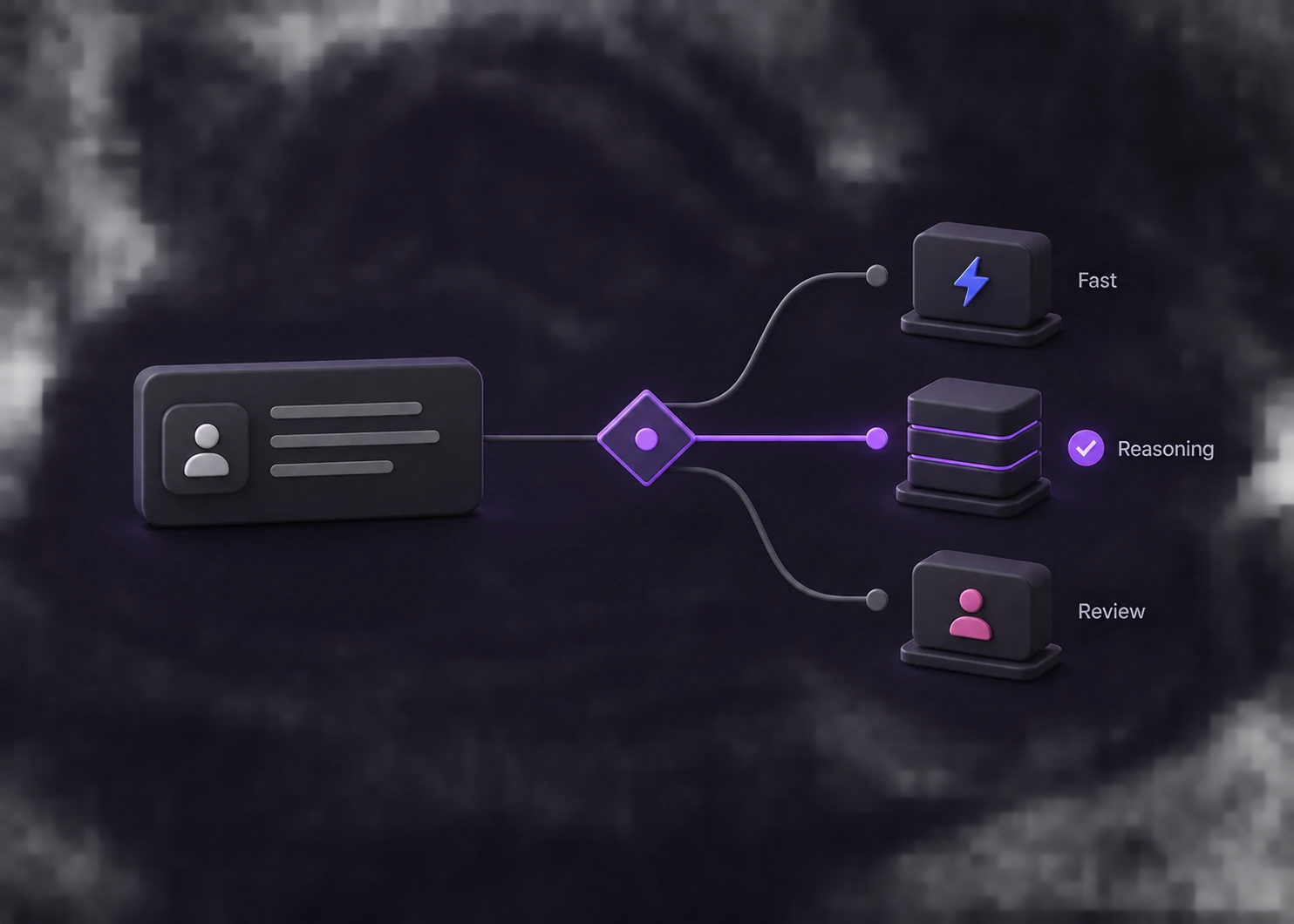
This is a comparison of documented interfaces and workflow design. LLMs can also return constrained outputs; no model is declared faster, cheaper or more accurate here.
| Dimension | Jev / Choice workflow | Generative LLM workflow |
|---|---|---|
| Output contractSource · | Selects one supplied label and returns its probability distribution and confidence. | Can generate language or return a constrained schema when the selected model and API support it. |
| Task definitionSource · | State supplies context; a Choice question supplies instructions and label criteria. | Instructions and context define the task; a schema or tool definition can constrain the result. |
| Route selectionSource · | A finite label can map to a known handler in application code. | Structured responses or tool selection can also represent a known route; test the exact model and configuration. |
| Interpreting the resultSource · | Confidence describes how concentrated the choice distribution is, not proven correctness. | Valid structured output establishes shape, not truth or task success. Application-level validation is still required. |
| Open-ended writingSource · | The Choice workflow returns a label, not a support reply or a new explanatory document. | A generative model can produce the written answer; output constraints should reflect the task. |
| Executing an actionSource · | Application code validates the label and decides whether an allowed handler may run. | A returned tool call likewise needs application code to execute it and enforce permissions. |
These patterns can coexist: a finite decision may choose which generative workflow runs next.
These are documentation entry points, not a ranking. Provider families contain different models; verify support for the exact model you select.
 TypeSafe AI
Yes. An LLM can select labels through prompting, structured output or tool selection when its interface supports the required constraints. Compare the actual task, model and integration; finite classification is not exclusive to Jev.
No. The Choice workflow shown here returns a finite decision. Tasks that require an original response, explanation or conversation need a generative step or another suitable system.
Yes. An application can use a Jev decision to select an allowed downstream model or handler, then run that handler after checking its own policy. The routing use-case page shows this separation.
Use the same representative inputs and expected outcomes, version the model and policy, and measure route correctness, review rate, full request time and total cost including retries and downstream calls. Keep a test set separate from threshold tuning.
No. The illustrations and workflow examples are not measured performance evidence. This page compares documented contracts and explains what to evaluate; it does not establish a speed, accuracy or cost winner.
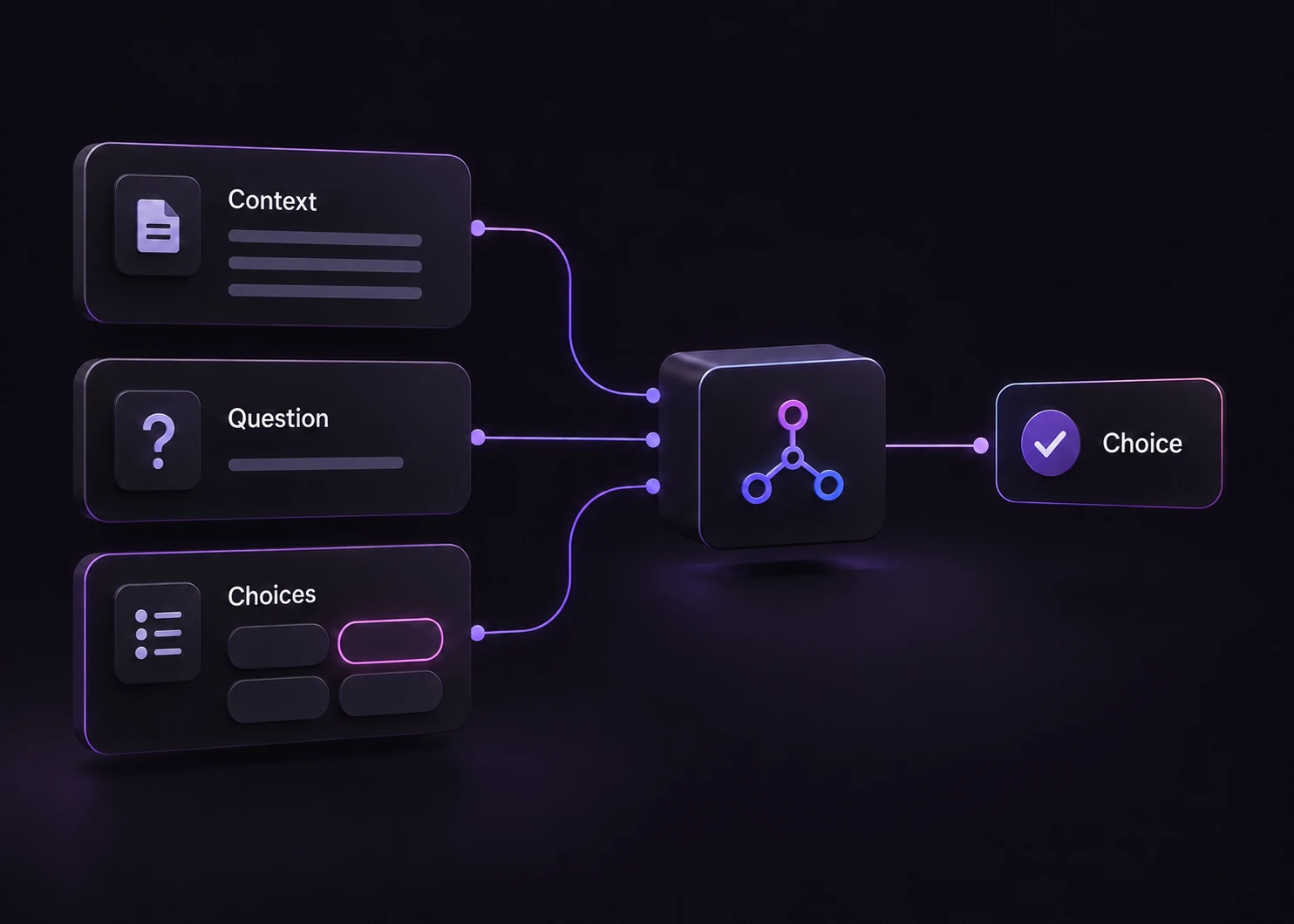 Try
TryLoad an editable example, change the context, and inspect a real API result.
Open Playground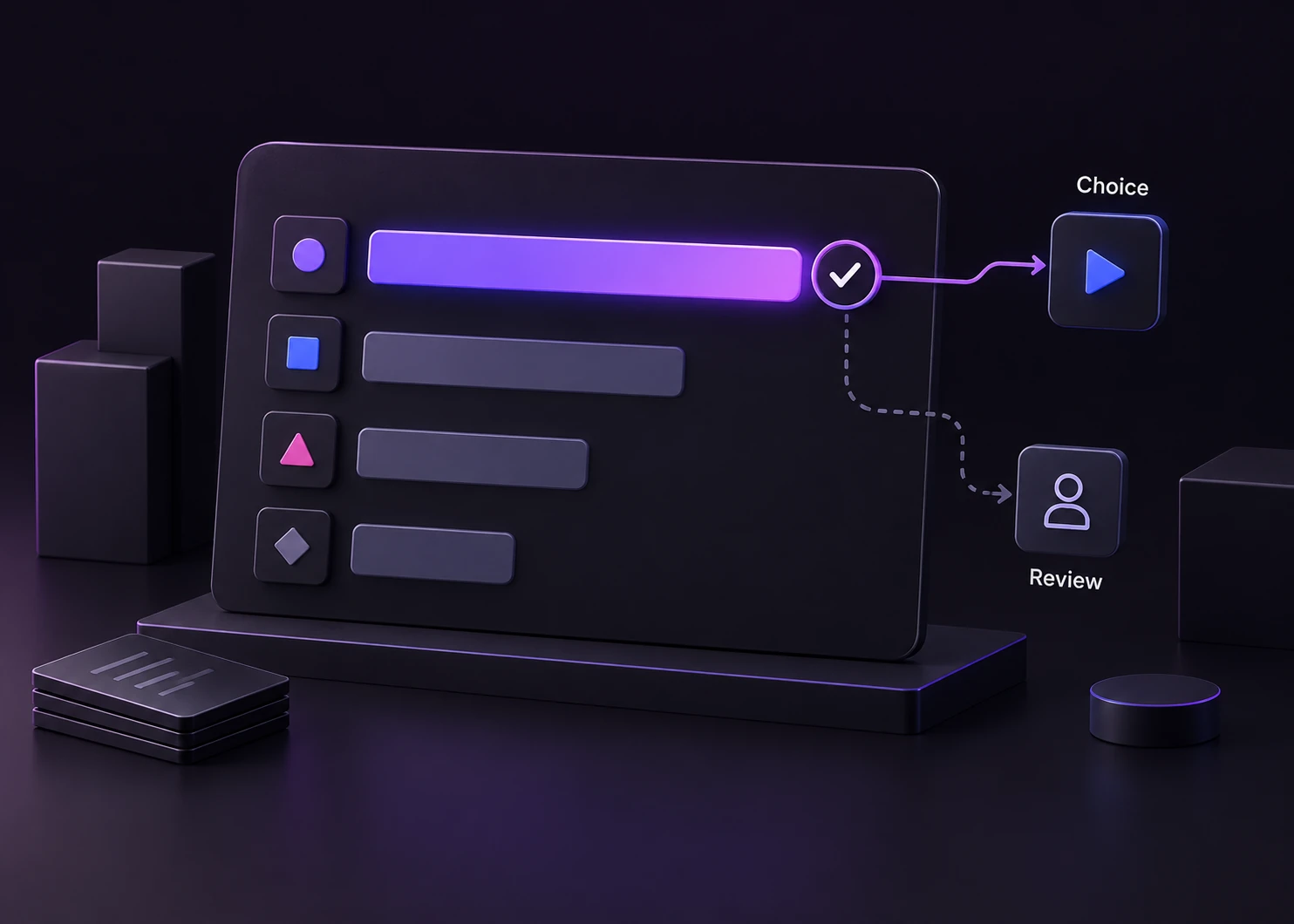 Model
ModelUnderstand the input contract, output format, and task fit.
ExploreUse caseGive simple requests a fast path. Give harder ones room to reason.
ExploreTry a representative routing task, then decide which outcome matters for your application.