Source and example scope
Compare each saved result with its authored expectation. A disagreement remains in the fixture review; the call is not repeated to obtain a preferred label.
Describe one fictional object, the cleanup instruction and any handling restriction. Compare a goal match with a wrong or blocked object; this text exercise does not control a robot.
The cleanup target specifies an empty mug, not every object called a mug. The full-mug example checks that condition while the book supplies an obvious negative case.
A handling restriction can make an otherwise matching object ineligible. Blocked preserves that restriction as part of the supplied toy state. The model does not discover real hazards, identify physical objects from text or verify a sensor.
The source proposes a layered robot architecture. This adaptation demonstrates object-to-goal matching in fictional text only. It has no connection to a robot controller, actuator or physical safety system.
These fictional inputs and decision rules were written for this page. The linked X discussion provides background; the technical implementation follows TypeSafe's Choice contract.
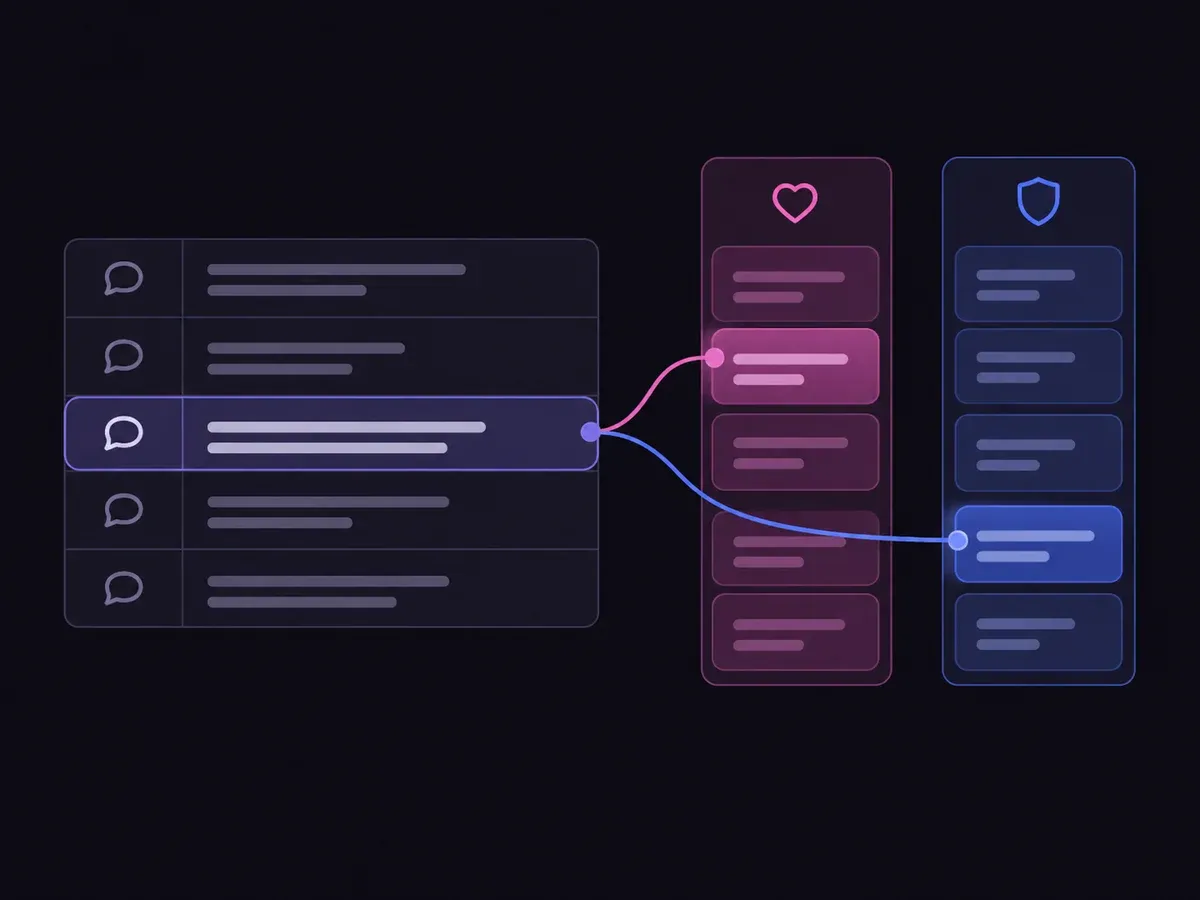
Use the sample to understand the rule, then test your own input for cleanup object matching.

Describe one fictional object, the cleanup instruction and any handling restriction.

Open the decision rules and keep the intended distinction between Goal match, Wrong object, Blocked, Unclear, Need evidence. Edit the choices only when testing your own rule.

Use a sample first, then try your own input. Compare the selected label with the other returned probabilities.

Review Unclear, Need evidence before using a result. The label is a decision about the supplied information, not an executed action.
| Original input | Observed label | Leading probability |
|---|---|---|
| Mug on the table | Goal match | 100% |
| Book outside target | Wrong object | 100% |
| Explicit restriction | Blocked | 100% |
| Unidentified vessel | Unclear | 88.0% |
| Full mug | Wrong object | 100% |
| Missing object state | Need evidence | 100% |
These are six original synthetic inputs, tested once per request revision. The percentage is the leading option probability, not measured accuracy. Authored expectations and any disagreements remain in the downloadable evidence. 6 of 6 results matched the authored fixture expectations.Verified
Compare each saved result with its authored expectation. A disagreement remains in the fixture review; the call is not repeated to obtain a preferred label.
The single-request SDK runner uses your private TYPESAFE_API_KEY. The offline consumer reads saved observations, checks request hashes and prints a pending output. It does not call the model or change any external system.
npm install @typesafe-ai/sdk@0.6.0
# Set TYPESAFE_API_KEY privately in your shell.
node run-choice-sample.mjs samples.json case-1
python preview_choice_workflow.py samples.json saved-api-results.jsonThe rubric explains the decision; the application owns the next step.
No. It only matches the supplied fictional goal and restrictions. Physical identification, motion planning and safety checks are outside this demonstration.
The authored target explicitly says empty mugs only. The contents are relevant evidence, even when the object noun matches.
No. It is the model distribution for this one request. The six examples are functional checks with authored expectations, not a representative benchmark. Inspect disagreements and evaluate your own examples before using the label.
The window shows an error and supplies no fresh judgment. The downloadable runner sends one request without retries. Need evidence is a valid outcome about incomplete input; it does not stand in for a network or provider failure.
Edit the evidence above or use the Playground to test another bounded question.